DEGENERATIVE JOINT DISEASE · ARTHROSIS · KNEE · HIP · SHOULDER · SPINE
A physician-led, laboratory-verified treatment programme targeting cartilage degradation, synovial inflammation and joint biomechanics — designed to reduce pain, restore function and delay or prevent joint replacement surgery.
Request Medical ConsultationAbout the Condition
Osteoarthritis (OA) is a chronic degenerative joint disease characterised by progressive breakdown of articular cartilage, low-grade synovial inflammation, subchondral bone remodelling and loss of joint space. It is the most common form of arthritis worldwide, affecting over 500 million people globally.
As cartilage erodes, the underlying bone becomes exposed and irregular, leading to pain, stiffness, reduced range of motion and, in advanced stages, significant functional disability. The disease is not purely mechanical — growing evidence confirms a substantial inflammatory component that accelerates cartilage loss and drives pain sensitisation.
Standard management relies on analgesics, physiotherapy and — when conservative measures fail — total joint replacement. Cellular therapy offers a biological alternative: targeting the inflammatory and degenerative processes that drive OA progression, rather than waiting until the joint is irreversibly damaged.
Knee Osteoarthritis
The most common and best-studied form of OA. Affects the tibiofemoral and patellofemoral compartments. Strongly associated with mechanical loading, obesity and previous meniscal injury. Knee OA has the strongest evidence base for mesenchymal stem cell therapy, with multiple controlled trials demonstrating cartilage regeneration and pain reduction.
Hip Osteoarthritis
Affects the acetabulofemoral joint. Often presents with groin pain radiating to the thigh or buttock. Progression may be slower than knee OA but leads to significant gait impairment and functional limitation. Femoroacetabular impingement is a common contributing factor in younger patients.
Hand and Finger Osteoarthritis
Affects the distal interphalangeal (DIP), proximal interphalangeal (PIP) and first carpometacarpal (CMC) joints. Common in women over 50. Causes pain, stiffness and reduced grip strength. Nodal OA (Heberden's and Bouchard's nodes) is a typical clinical presentation.
Spinal Osteoarthritis (Facet Joint)
Degenerative changes affecting the zygapophysial (facet) joints of the cervical and lumbar spine. Contributes to chronic axial back pain, morning stiffness and reduced spinal mobility. Often coexists with disc degeneration and spinal stenosis.
Our program is individually adapted for all subtypes and all stages of progression.
Important: Each patient is accepted into the programme only after a comprehensive individual medical assessment, including imaging review, functional evaluation and analysis of prior treatment history.
The BioCells Program
Our osteoarthritis programme combines five biological components into a single personalised protocol. Each protocol is constructed following detailed imaging review, biomechanical assessment and analysis of the patient's inflammatory profile, joint status and clinical priorities.
Minimally invasive administration
Treatment is delivered by ultrasound-guided intra-articular injection — not arthroscopy or open surgery. Most patients resume walking the same day.
No general anaesthesia
Local anaesthesia only. Eliminates anaesthesia-related risks entirely — particularly relevant for elderly patients or those with cardiovascular comorbidities.
No risk of immune rejection
MSCs are immunoprivileged: they express low levels of HLA-I, lack HLA-II and carry a minimal risk of rejection whether the protocol is autologous or allogeneic. Allogeneic MSC protocols do not require immunosuppression.
Targets the underlying biology, not just symptoms
Rather than masking pain with analgesics, our protocol targets cartilage degradation, synovial inflammation and subchondral bone pathology — the biological drivers of OA progression.
Compatible with existing treatment
Our programme does not require discontinuation of current medications, physiotherapy or other conservative measures. Cellular therapy is additive to standard care.
Biological alternative to joint replacement
A joint prosthesis is not a lifetime solution: the typical implant lifespan is 15–20 years, after which a revision procedure is required — technically more difficult and carrying greater risks. Joint replacement surgery itself requires general anaesthesia and carries risks of infection, thrombosis and prolonged rehabilitation. Cellular therapy is a biological alternative: MSCs, exosomes and PRP are delivered locally into the joint and stimulate regeneration of cartilage-like tissue. This preserves the patient's own joint — postponing or avoiding implant surgery.
What It Is
MSCs are multipotent regenerative cells with proven chondroprotective and immunomodulatory properties. They are the most extensively studied cell type in osteoarthritis research, with over 100 clinical trials demonstrating safety and efficacy — particularly in knee OA.
How It Is Done
Cells are collected from the patient's own bone marrow or adipose tissue (autologous, under local anaesthesia) or sourced from a certified donor (allogeneic), depending on clinical indications and joint involved. All cells are expanded, quality-controlled and tested in our laboratory before intra-articular administration.
Biological Mechanisms
How This Helps in Osteoarthritis
In osteoarthritis, the balance between cartilage synthesis and degradation is disrupted — degradation dominates. MSCs shift this balance back toward repair by suppressing the inflammatory enzymes that break down cartilage, stimulating new matrix production, and reducing the chronic low-grade synovitis that perpetuates joint damage.
Your Medical Board
The exact combination, dosage, sequencing and delivery method of all five components is determined individually by our medical board for each patient. No two treatment protocols are identical. Your programme is constructed based on your specific diagnosis, affected joints, imaging findings, biological markers and clinical priorities.
Your protocol is designed individually. Speak with our medical team to understand what your personalised program would include.
Request ConsultationPatient Journey
Your case is reviewed remotely by our physician team. We assess your diagnosis, current imaging, functional status, pain levels and treatment history. This consultation is free and carries no obligation.
A detailed review of all medical documentation including MRI/X-ray imaging. Our medical board evaluates eligibility, confirms the affected compartments and severity grade, and designs your personalised therapeutic protocol.
Your cells are collected, isolated, expanded and quality-tested in our laboratory. Each batch receives a full traceability certificate. This stage typically takes 2–3 weeks.
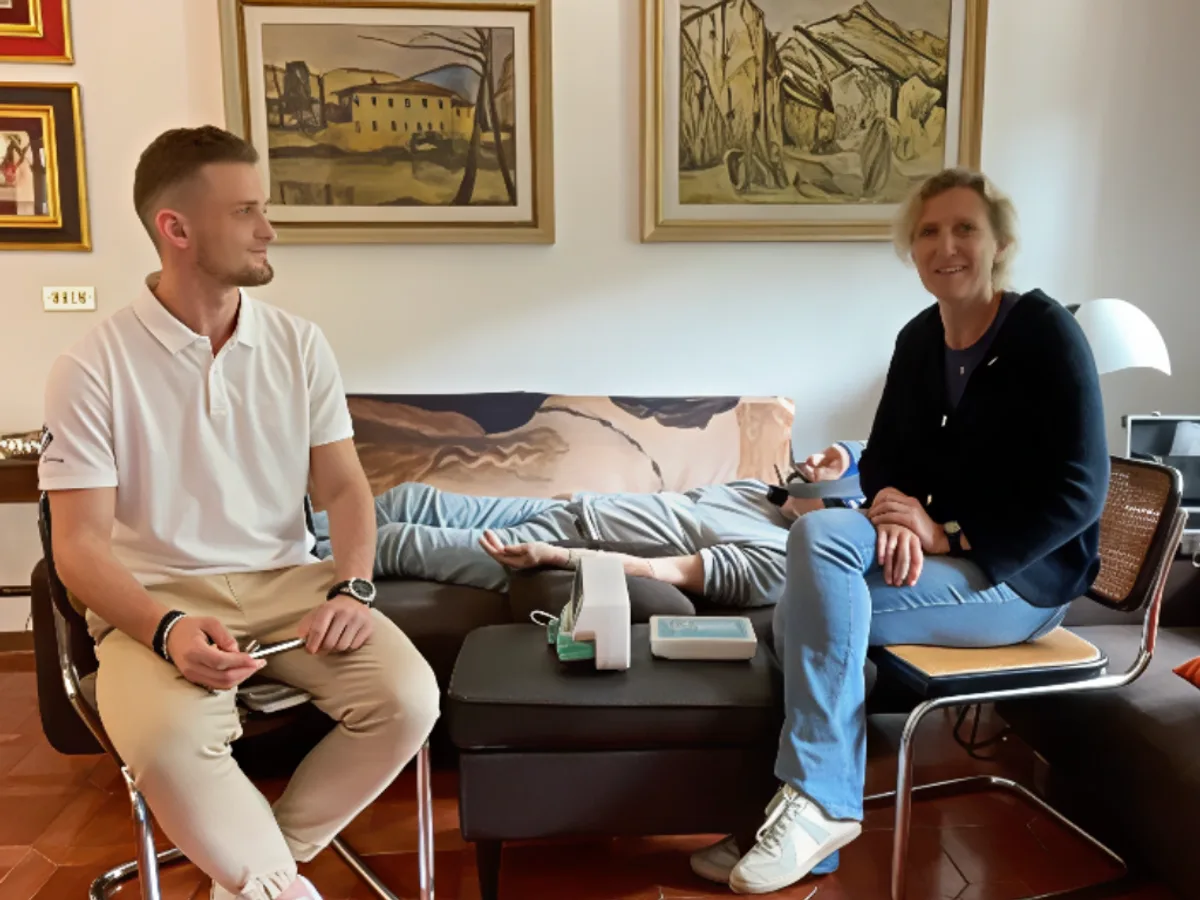
Cells and biologics are delivered by ultrasound-guided intra-articular injection — no surgery, no general anaesthesia. Treatment is performed at our clinic. Most patients walk out of the clinic within hours of the procedure. Airport transfers, accommodation and visa support are included in the programme.
Structured rehabilitation sessions with our specialist, adapted to your specific joint, OA severity and functional goals. A progressive loading protocol ensures the treated joint recovers under optimal biomechanical conditions.
Your dedicated coordinator monitors pain levels, functional status and imaging progression. Follow-up MRI at 6 and 12 months evaluates cartilage response. A medical-grade wearable bracelet supports continuous activity tracking regardless of your location.
The first step is free. Request a medical consultation and our medical consultant will contact you within 24 hours.
Request ConsultationSafety Profile
Cellular therapy for osteoarthritis is considered safe when delivered under proper medical supervision and according to validated protocols. Intra-articular injection of MSCs and PRP has been evaluated in over 100 clinical trials with consistently favourable safety profiles.
Temporary mild reactions — such as transient joint swelling, mild warmth at the injection site or low-grade discomfort for 24–72 hours — may occur. These are typically self-limiting and indicate active biological engagement within the joint.
A final medical assessment is performed on-site before every treatment session. If imaging or clinical examination reveals contraindications not identified during remote evaluation, the programme may be modified or postponed.
All contraindications are evaluated individually. A contraindication in one clinical context does not necessarily preclude treatment in a different context — this is always determined by physician assessment.
Standard Contraindications
Active joint infection (septic arthritis)
Active malignancy or ongoing chemotherapy / radiotherapy
Severe decompensated cardiac or renal failure
Pregnancy
Active systemic infection or fever
Post-Treatment
Dedicated rehabilitation specialist
monitors joint recovery, pain trajectory and progressive loading
Personalised rehabilitation programme
adapted to the specific joint, OA severity and individual functional goals
Medical-grade wearable monitoring
continuous activity and gait data supporting clinical decision-making
Follow-up imaging protocol
MRI at 6 and 12 months to evaluate cartilage and structural response
Long-term coordinator support
proactive check-ins, clinical guidance and response to any changes in status
Cartilage is among the slowest tissues in the body to regenerate. Clinical improvement in pain and function typically precedes structural changes visible on imaging. The rehabilitation and monitoring period following treatment is as medically important as the procedure itself.
Patient Stories
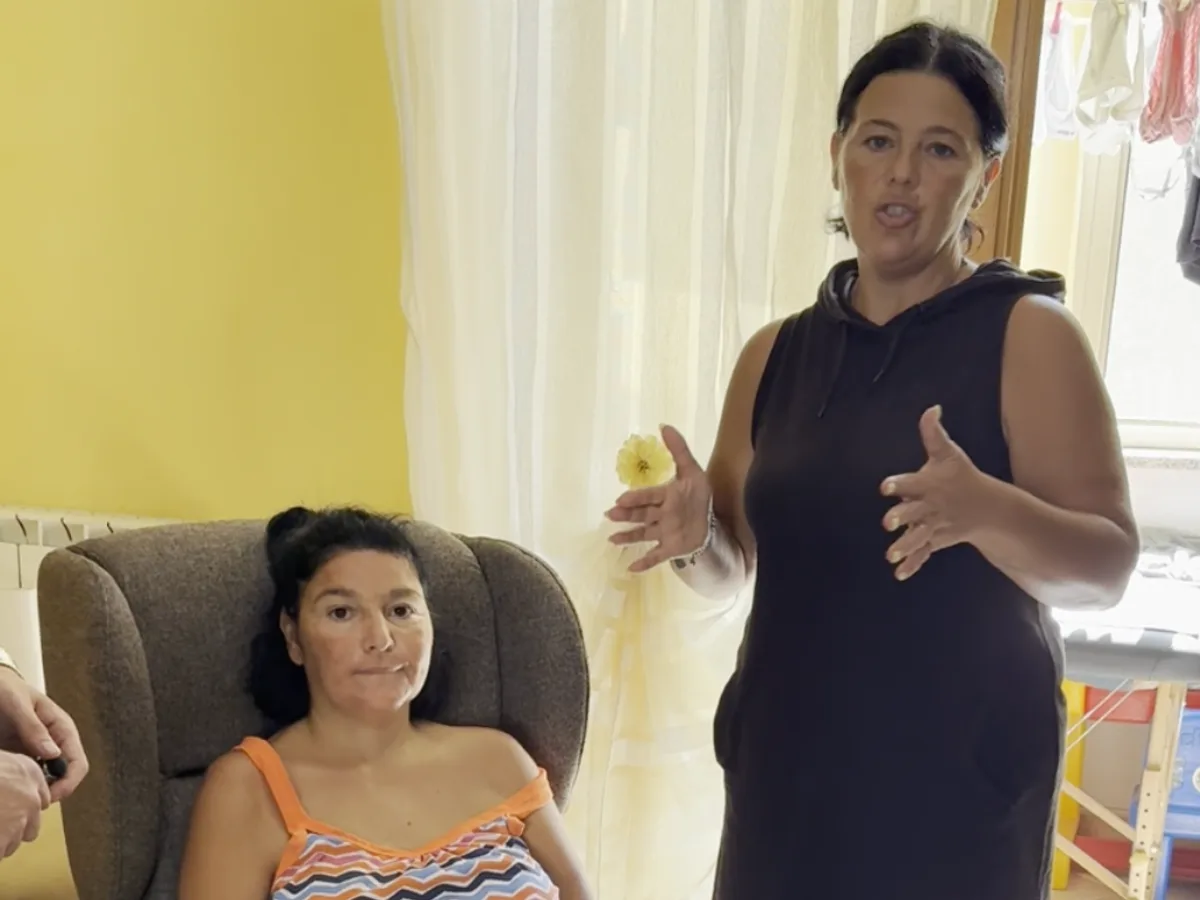
“I was scheduled for a total knee replacement. My surgeon said there was nothing else to try. I started the programme as a last option before surgery. Four months later I walked three kilometres without stopping. First time in two years. The replacement is still on hold. My surgeon reviewed the follow-up imaging and agreed there was no urgency to operate.”
Patient
Knee Osteoarthritis (Kellgren-Lawrence IV) · Germany
Every case is assessed individually by our physician team. Request a consultation to discuss your specific situation with our physician team.
Request ConsultationPatient Cases
Documented treatment outcomes recorded by the BioCells Medical team after personalised regenerative medicine protocols.
Get Started
If you are living with osteoarthritis and considering your treatment options, our medical team is available for a free, no-obligation medical consultation — based on your diagnosis, imaging findings and individual clinical profile.
We review every inquiry personally. You will speak with a physician, not an administrator.
Submit your case online or by phone
Our medical consultant contacts you to review your documents
The medical board presents your personalised treatment plan
Request a Consultation
Tell us about your condition. Our medical consultant will contact you within 24 hours to review your documents.
Open Consultation FormMultilingual coordination — English, Italian, French, Russian, Polish
Evidence Base
Our clinical approach is informed by and consistent with published research in the field of regenerative medicine.