
Mesenchymal Stem Cells in ALS: A Clinical Update
Dr. Alina Novak
18 April 2026
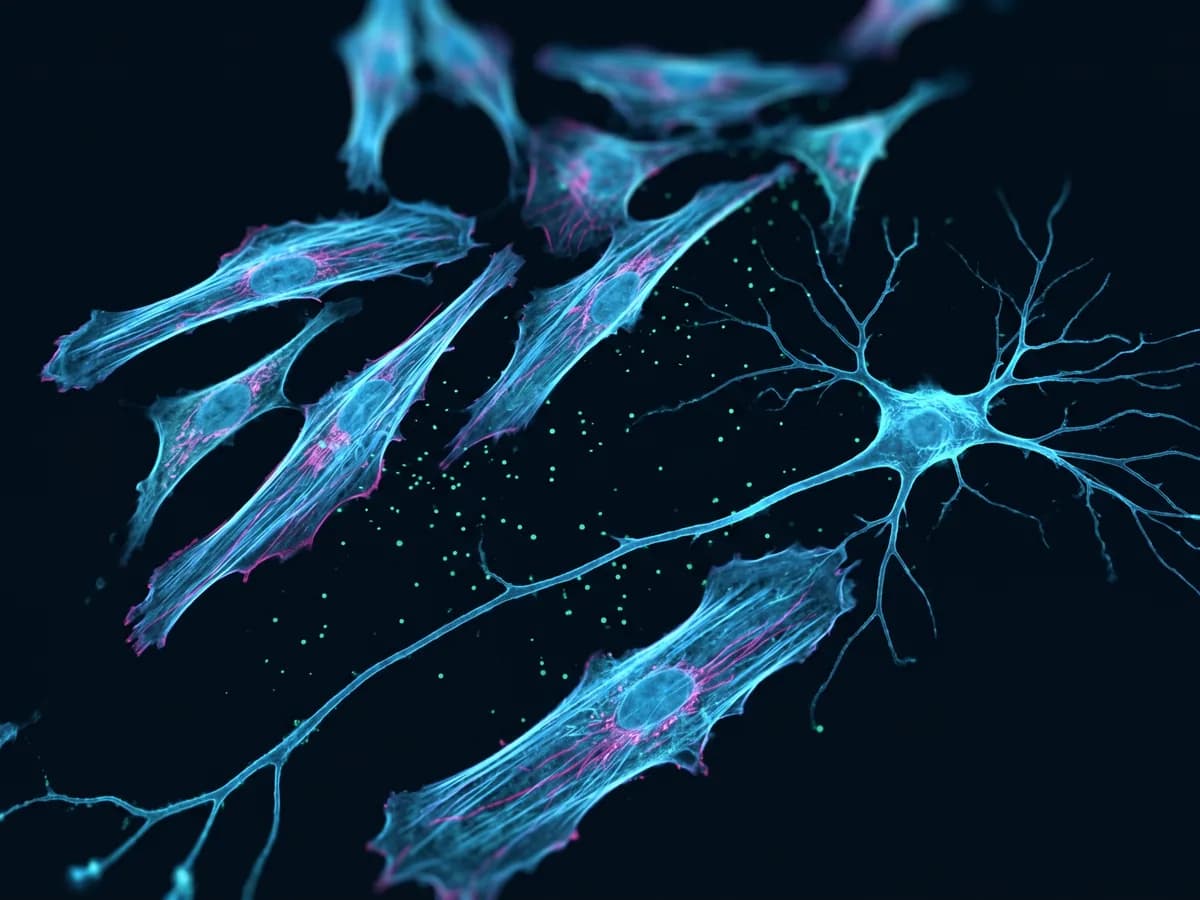
Mesenchymal stem cells have been studied in ALS for over a decade. A review of the paracrine mechanism, the clinical trial record, what the evidence shows, and why MSCs remain the foundational modality on which combination cell therapy is built.
Why mesenchymal stem cells in ALS
Mesenchymal stem cells (MSCs) are among the most studied cell types in regenerative medicine, and ALS has been one of their longest-running targets. The rationale is not that MSCs replace lost motor neurons — they do not — but that they modulate the hostile environment in which motor neurons die. In a disease where neuroinflammation and oxidative stress accelerate cell loss, a cell that can dampen inflammation and support neuron survival is a logical candidate.
The mechanism: paracrine, not replacement
MSCs work mainly through what they secrete. Their secretome includes anti-inflammatory cytokines, neurotrophic factors such as BDNF and GDNF, and extracellular vesicles that carry regulatory signals. This paracrine activity suppresses pathological immune activation, reduces oxidative stress and supports the survival of remaining motor neurons. The breadth of this output is why MSC therapy acts on several disease mechanisms at once rather than a single molecular pathway.
The clinical record
MSCs have been tested in ALS across more than a decade of trials: autologous bone-marrow MSC studies from academic centres, intrathecal administration protocols, and MSC products engineered to secrete neurotrophic factors. The published evidence base — PMID 30048006, 34719198 and 38244235 — consistently reports an acceptable safety profile and signals of biological activity, with responses that vary between patients.
What the evidence shows
The consistent themes across these studies are safety and biological plausibility rather than large, definitive efficacy. MSC therapy has repeatedly been shown to be well tolerated by intravenous and intrathecal routes, and several trials have reported slowing of decline on validated scales in subsets of participants. The field's honest position is that MSCs have a strong mechanistic and safety foundation, with efficacy data that continue to mature.
MSC as the foundation of combination cell therapy
At BioCells Medical, mesenchymal stem cells are the foundational regenerative modality on which the broader protocol is built. They are combined with regulatory T-cell therapy, exosomes and supporting modalities so that the inflammatory, immune and trophic dimensions of ALS are addressed together rather than in isolation.
The state of the evidence
More than a decade of clinical work has established mesenchymal stem cells as a safe and mechanistically grounded approach in ALS, with biological effects that are consistently observed and efficacy that continues to be studied. That foundation is why MSCs remain central to combination cell therapy, working alongside the immune-focused modalities that newer research has brought forward.