RRMS · SPMS · PPMS · ALL STAGES TREATED
A physician-led programme targeting the immune and neurological mechanisms of MS — designed to stabilise neurological function, reduce disease activity, extend remission periods and restore independence in daily life.
Request Medical ConsultationAbout the Condition
Multiple Sclerosis is a chronic autoimmune disease of the central nervous system (CNS). The immune system — specifically autoreactive T cells — mistakenly attacks the myelin sheath that protects nerve fibres in the brain and spinal cord. As myelin is destroyed, nerve signals are disrupted, slowed or blocked entirely.
MS affects approximately 2.9 million people worldwide. It is most commonly diagnosed between the ages of 20 and 40. Despite significant advances in disease-modifying therapies (DMTs), many patients continue to experience relapses, progressive disability and side effects from long-term immunosuppression.
The BioCells Medical programme addresses all MS subtypes, with protocols individually adapted to disease activity, functional status and treatment history.
Relapsing-Remitting MS (RRMS)
The most common form, representing approximately 85% of initial diagnoses. Characterised by periods of acute neurological symptoms (relapses) followed by partial or full recovery. Between relapses, the disease may appear stable, but subclinical damage often continues. Over time, many RRMS patients transition to secondary progressive MS.
Secondary Progressive MS (SPMS)
A gradual, steady neurological decline following an initial relapsing-remitting phase. Relapses may still occur but become less frequent. The dominant pattern shifts to continuous worsening of disability. SPMS is one of the most challenging forms to manage with conventional DMTs alone.
Primary Progressive MS (PPMS)
Continuous neurological worsening from onset, without distinct relapses or remissions. Represents approximately 10–15% of MS diagnoses. PPMS typically presents later in life and progresses more evenly than relapsing forms. Treatment options are particularly limited for this subtype.
Clinically Isolated Syndrome (CIS)
A first demyelinating episode that may or may not progress to MS. CIS involves a single episode of neurological symptoms lasting at least 24 hours. MRI findings and cerebrospinal fluid analysis help determine the likelihood of progression. Early intervention at this stage may have the greatest long-term impact.
Our program is individually adapted for all subtypes and all stages of progression.
Important: Each patient is accepted into the programme only after a comprehensive individual medical assessment evaluating MS subtype, EDSS score, MRI findings, relapse history and current medication.
The BioCells Program
MS is driven by two biological processes: immune-mediated myelin destruction (inflammation) and neurodegeneration. The BioCells Medical protocol addresses both — not just one. Each programme is constructed individually after a detailed evaluation of the patient’s MS subtype, disease activity and functional status.
Targets both inflammation and neurodegeneration
Most DMTs address only the inflammatory component. Our protocol works on both myelin destruction and the underlying neurodegeneration simultaneously.
Minimally invasive administration
Treatment is delivered by intravenous infusion or targeted injection. Safe across all age groups and disability levels.
Compatible with existing MS medication
Patients do not need to stop current DMTs before commencing our protocol. The programme integrates with your existing treatment plan.
Addresses progressive forms of MS
SPMS and PPMS have very limited conventional treatment options. Our cellular approach targets the biological mechanisms active in all MS subtypes, including progressive forms.
Exosomes cross the blood-brain barrier
Direct CNS targeting allows therapeutic molecules to reach demyelinated areas that conventional medications cannot access effectively.
No risk of immune rejection
MSCs are immunoprivileged: they express low levels of HLA-I, lack HLA-II and carry a minimal risk of rejection whether the protocol is autologous or allogeneic. Allogeneic MSC protocols do not require immunosuppression.
What It Is
T-regs are specialised immune cells that naturally suppress destructive autoimmune activity. In MS, the autoreactive T cells that attack myelin are insufficiently controlled by the patient’s own regulatory immune mechanisms. Supplementing T-regs restores this balance.
How It Is Done
Delivered autologously (from the patient’s own blood) or allogeneically (from a certified donor), based on the patient’s immune profile and disease activity. All preparation and quality testing performed in our laboratory.
Biological Mechanisms
How This Helps in Multiple Sclerosis
The fundamental problem in MS is a broken immune checkpoint — the body attacks its own nerve insulation. T-regs are the immune system’s built-in off-switch for this kind of self-destructive activity. By supplementing T-regs, we help restore the immune tolerance that MS disrupts, reducing both relapse frequency and background inflammatory damage.
Your Medical Board
The exact combination, dosage, sequencing and delivery method of all five components is determined individually by our medical board for each patient. No two treatment protocols are identical. Your programme is constructed based on your specific MS subtype, disease activity, EDSS score and clinical priorities.
Your protocol is designed individually. Speak with our medical team to understand what your personalised program would include.
Request ConsultationPatient Journey
Your case is reviewed remotely by our physician team. We assess your diagnosis, MS subtype, EDSS score, MRI findings and treatment history. This consultation is free and carries no obligation.
A detailed review of all medical documentation. Our medical board evaluates eligibility, confirms safety parameters and designs your personalised therapeutic protocol based on your subtype, stage and functional status.
Your cells are collected, isolated, expanded and quality-tested in our laboratory. Each batch receives a full traceability certificate. This stage typically takes 2–3 weeks.
Cells are delivered by intravenous infusion or targeted local administration — no surgery, no general anaesthesia.
Structured sessions with our rehabilitation specialist, focused on gait retraining, balance recovery, coordination and spasticity management. Adapted to your current functional capacity.
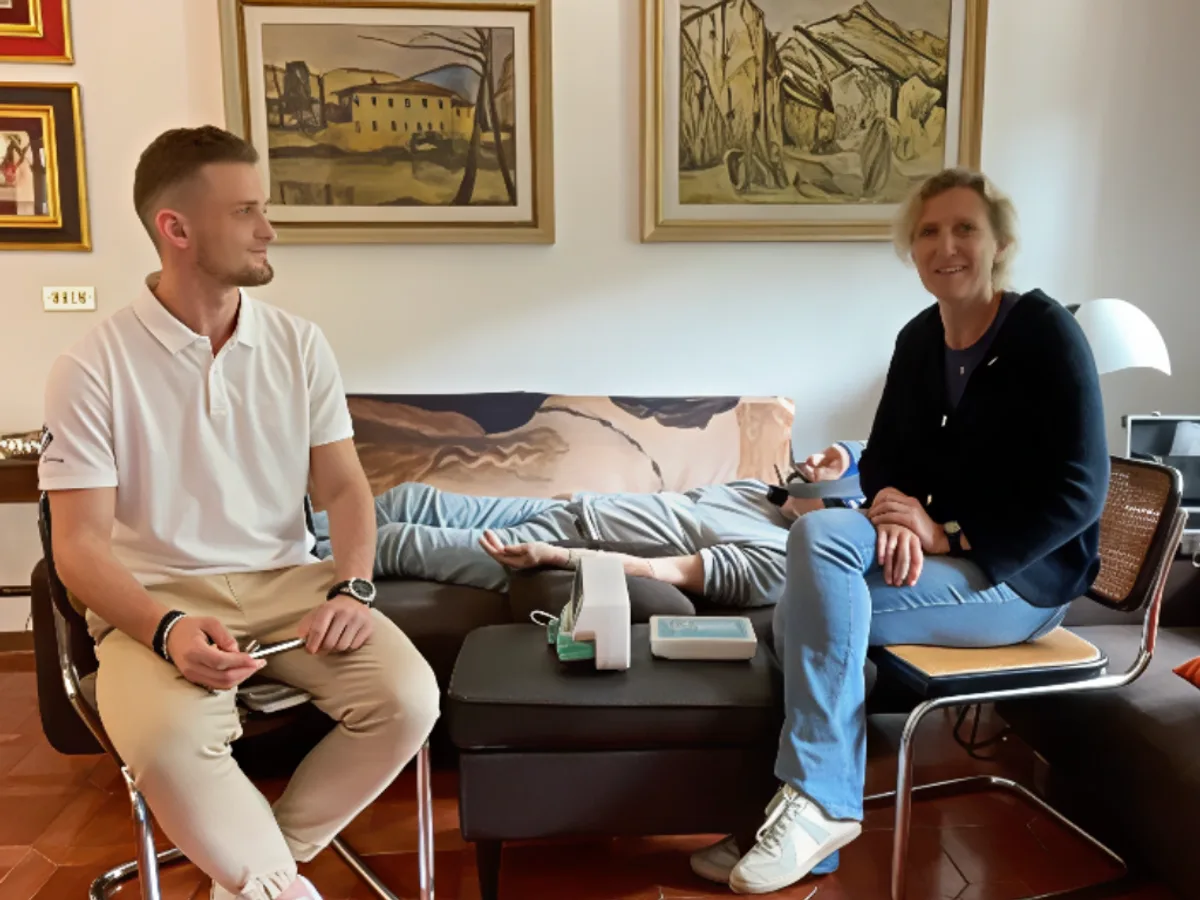
Your dedicated coordinator monitors neurological status, tracks EDSS progression, provides clinical guidance and adjusts recommendations based on your recovery data. A medical-grade wearable bracelet supports continuous health tracking.
The first step is free. Request a medical consultation and our medical consultant will contact you within 24 hours.
Request ConsultationSafety Profile
The programme is well-tolerated across all MS subtypes and disability levels. Mild transient reactions — brief fatigue, injection-site sensitivity or low-grade temperature — may occur in a minority of patients and typically resolve within 24–48 hours.
All eligibility is confirmed individually by our physician team before treatment. A final medical assessment is performed on-site before each session. If a patient’s neurological status has changed significantly, the protocol is adjusted accordingly.
All contraindications are evaluated individually. A contraindication in one clinical context does not necessarily preclude treatment in a different context.
Standard Contraindications
Active acute infection or fever
Active malignancy or ongoing chemotherapy
Severe decompensated cardiac or renal failure
Pregnancy
Post-Treatment
Dedicated rehabilitation specialist
monitors neuromotor recovery, gait stability and functional progress
Medical-grade wearable bracelet
continuous tracking of sleep, activity, fatigue patterns and mobility
Long-term clinical coordinator support
proactive check-ins, EDSS tracking and response to status changes
Personalised rehabilitation programme
adapted to MS subtype and current functional capacity
Continued clinical access
our medical team remains available for ongoing reassessment and protocol adjustment
MS is a long-term condition that requires sustained medical attention. The period following treatment is as clinically important as the treatment itself — this is when biological regeneration takes hold and functional gains consolidate.
Patient Stories
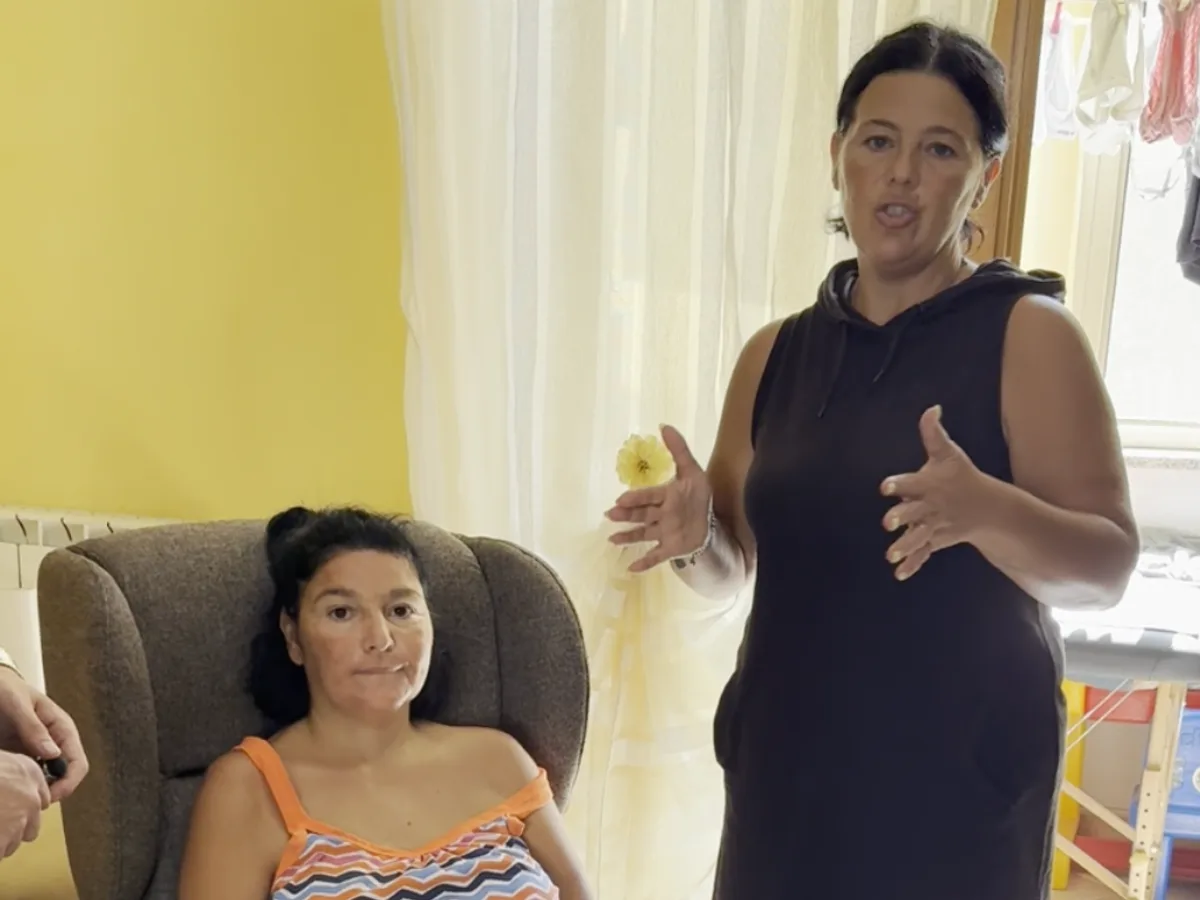
“Fourteen months without a relapse. Before treatment, they came every three or four months. The heaviness in my legs lifted and I’m back to walking my dog in the morning. My neurologist in Almaty confirmed the inflammatory activity has calmed down considerably.”
Patient
Relapsing-Remitting MS · Kazakhstan
Every case is assessed individually by our physician team. Request a consultation to discuss your specific situation with our physician team.
Request ConsultationPatient Cases
Documented treatment outcomes recorded by the BioCells Medical team after personalised regenerative medicine protocols.
Get Started
Whether you are newly diagnosed or have been living with MS for years, our physician team is available for a free medical consultation — tailored to your subtype, current EDSS and treatment history. We work with patients at every stage of the disease.
We review every inquiry personally. You will speak with a physician, not an administrator.
Submit your case online or by phone
Our medical consultant contacts you to review your documents
The medical board presents your personalised treatment plan
Request a Consultation
Tell us about your condition. Our medical consultant will contact you within 24 hours to review your documents.
Open Consultation FormMultilingual coordination — English, Italian, French, Russian, Polish
Evidence Base
Our clinical approach is informed by and consistent with published research in the field of regenerative medicine.