
T-reg Dysfunction in Parkinson's Disease and the Case for Immune Rebalancing
Dr. Uladzislau Tsvirko
15 May 2026
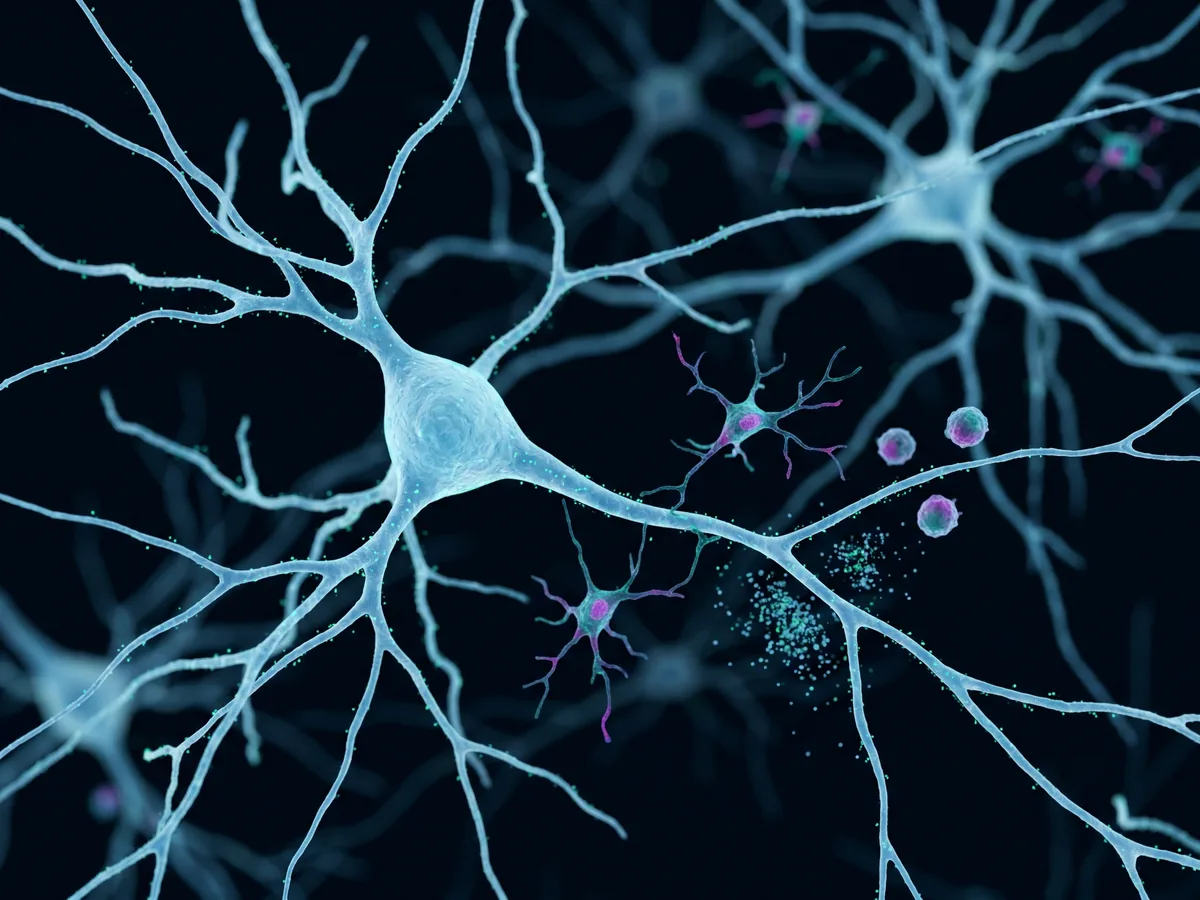
The loss of dopamine neurons in Parkinson's disease is shaped by a chronic inflammatory response that regulatory T-cells normally restrain. A review of the weakened Th17/T-reg balance, the early clinical signals from boosting regulatory T-cells, and the rationale for immune rebalancing rather than broad suppression.
Parkinson's disease has an inflammatory dimension
Parkinson's disease is defined by the loss of dopamine-producing neurons in the substantia nigra, but the process that drives that loss is not purely degenerative. Activated microglia, infiltrating T-cells, and a chronic inflammatory response surround the dying neurons. Misfolded alpha-synuclein — the protein that aggregates in Parkinson's — is itself recognised by the immune system and can provoke a T-cell response. Neuroinflammation, in other words, is woven into the disease rather than incidental to it.
Regulatory T-cells and the parkinsonian brain
Regulatory T-cells (T-reg) normally restrain this kind of immune activity and protect neurons from collateral damage. In Parkinson's disease, that protection is weakened: regulatory T-cells isolated from patients are less able to suppress inflammatory responses than those from healthy controls, and their capacity tends to decline as the disease advances. A weakened brake leaves microglial activation and effector T-cell activity less opposed.
A shifted immune balance
The picture that emerges is one of imbalance rather than simple deficiency. Pro-inflammatory effector T-cells are relatively more active while regulatory T-cells are relatively less effective — a shift that favours sustained neuroinflammation. Correcting that balance, rather than broadly suppressing immunity, is the logic behind immune-focused approaches to the disease.
Boosting regulatory T-cells: early clinical signals
This logic has been tested in patients. In an early-phase study, Olson and colleagues treated people with Parkinson's using sargramostim, a form of GM-CSF, and observed an increase in regulatory T-cell number and function accompanied by modest improvement in motor scores. Low-dose interleukin-2, used to selectively expand regulatory T-cells in other autoimmune settings, is being explored on the same principle. These are small, early studies — but they show that regulatory T-cell function in Parkinson's can be moved in a favourable direction.
Immune rebalancing as a treatment rationale
The regulatory T-cell component of the personalised protocols at BioCells Medical for Parkinson's disease is built on this rationale. Polyclonal T-reg therapy acts across the whole dysregulated neuro-immune environment rather than a single target, a multi-target approach matched to a multi-factor disease. It works alongside mesenchymal stem cells and exosomes that address the inflammatory and trophic pathways implicated in dopaminergic neuron loss. The aim is to restore the regulatory capacity that the disease erodes rather than to suppress immunity wholesale.
The state of the evidence
Research into regulatory T-cells in Parkinson's is mechanistically well grounded and supported by consistent observations in patients, and the work is advancing from mechanism toward clinical application. What is clear is that the immune system participates in the progression of Parkinson's disease, that regulatory T-cells are a central part of that system, and that strengthening their function is an actively investigated therapeutic direction.