
Neuroinflammation as a Therapeutic Target in Neurodegeneration
Dr. Uladzislau Tsvirko
29 April 2026
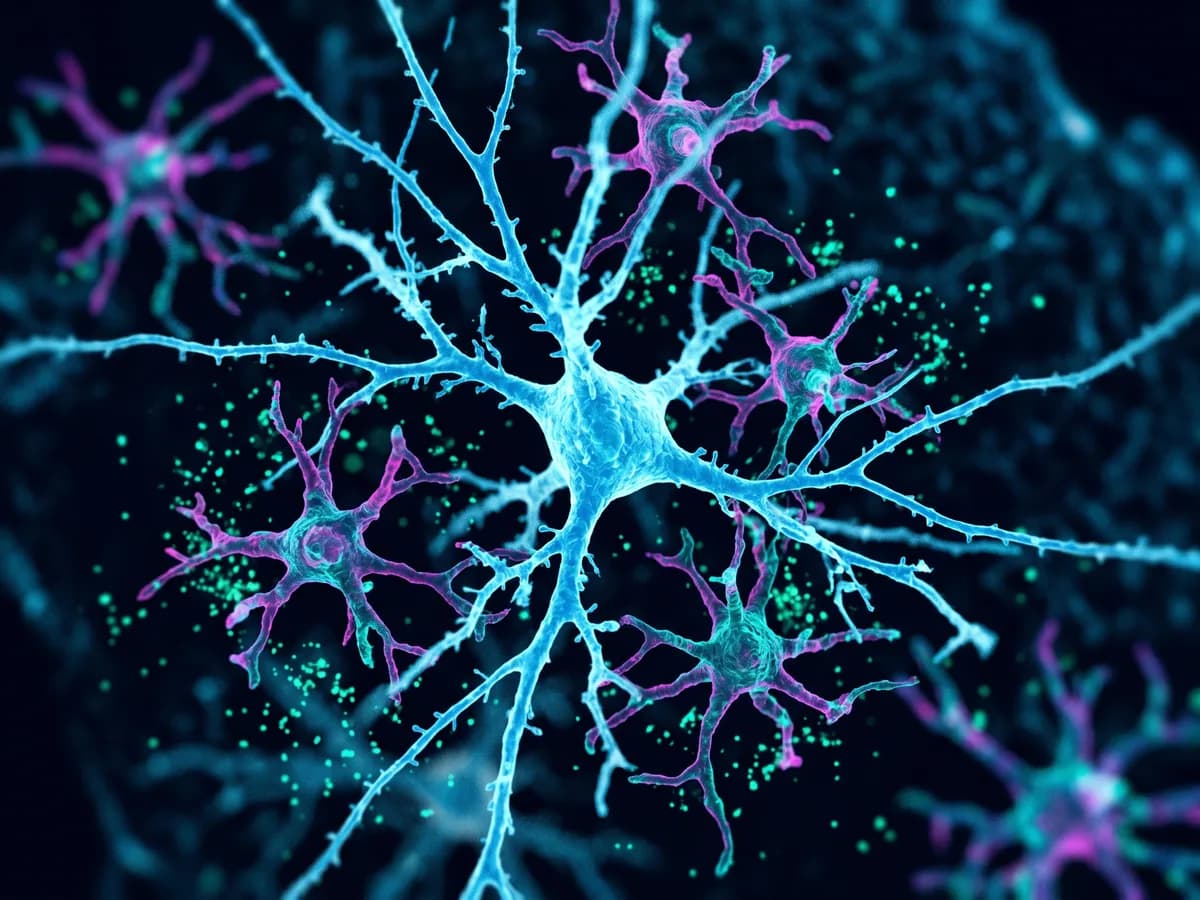
Across ALS, Parkinson's, multiple sclerosis and Alzheimer's, a sustained inflammatory response surrounds and accelerates the loss of neurons. A review of microglia, peripheral immune involvement, the shared mechanism across diseases, and why regulatory T-cells have become a focus for calming it.
From neuron-centric to immune-inclusive models
For most of the twentieth century, neurodegenerative diseases were understood as disorders of neurons alone, cells that wear out, misfold proteins and die. That model is incomplete. Across amyotrophic lateral sclerosis, Parkinson's disease, multiple sclerosis and Alzheimer's disease, the same finding recurs: a sustained inflammatory response surrounds and accelerates the loss of neurons. Neuroinflammation has moved from a footnote to a central character in how these diseases progress.
Microglia: the brain's resident immune cells
Microglia are the immune cells of the central nervous system. In health they survey tissue, clear debris and support neurons. Under chronic stress they shift toward a pro-inflammatory state, releasing cytokines and reactive molecules that damage the very neurons they once protected. This activation is not merely a side effect of neurodegeneration; in many models it actively drives neuron loss, creating a feed-forward loop between dying cells and an inflamed environment.
The peripheral immune system crosses into the CNS
The brain is not as isolated from the rest of the immune system as once believed. In neurodegenerative disease, peripheral immune cells, including T-cells, cross into the central nervous system and shape the local response. Some are effector cells that amplify inflammation; others are regulatory T-cells (T-reg) that should restrain it. The balance between them helps determine whether the inflammatory response stays contained or runs unchecked.
A shared mechanism across different diseases
What makes neuroinflammation compelling as a target is that it is shared. The proteins that misfold differ between diseases — SOD1 or TDP-43 in ALS, alpha-synuclein in Parkinson's, myelin antigens in multiple sclerosis — but the downstream inflammatory machinery overlaps. A therapy that calms that machinery could, in principle, be relevant across conditions that otherwise have little in common at the genetic level.
Targeting neuroinflammation: the regulatory T-cell angle
This is where regulatory T-cells enter. Rather than broadly suppressing immunity, which controls inflammation but leaves the patient vulnerable, restoring regulatory T-cell function aims to rebalance the response: dampening the destructive activity while preserving normal defence. The observation that T-reg function declines as ALS and Parkinson's progress, together with early clinical signals from strengthening T-reg, has made this one of the most actively studied approaches to neuroinflammation.
Implications for cell therapy
The personalised protocols at BioCells Medical are built on this immune-inclusive view of neurodegeneration. Regulatory T-cells, mesenchymal stem cells and exosomes each act on the inflammatory environment from a different angle — immune rebalancing, paracrine modulation and molecular signalling — rather than targeting a single protein. Treating neurodegeneration as partly an immune problem is what connects these modalities into one approach.