INFLAMMATORY MYOPATHY · METABOLIC MYOPATHY · INHERITED MYOPATHY
A physician-led treatment programme targeting the biological mechanisms of progressive muscle disease — designed to reduce muscle fibre degeneration, modulate autoimmune inflammation, support mitochondrial function and preserve functional independence.
Request Medical ConsultationAbout the Condition
Myopathy is a broad clinical term for diseases in which skeletal muscle fibres do not function properly. Unlike neurogenic conditions that originate in the nervous system, myopathies arise from pathology within the muscle tissue itself — affecting the structural proteins, energy metabolism, or immune regulation of muscle fibres.
The clinical hallmark of most myopathies is progressive proximal muscle weakness: difficulty raising the arms, climbing stairs, rising from a seated position. Depending on the type, patients may also develop elevated creatine kinase (CK) levels, muscle pain, respiratory compromise and cardiac involvement.
Myopathies vary significantly in their underlying mechanism. Inflammatory forms involve autoimmune destruction of muscle tissue. Metabolic forms involve defective energy production within muscle cells. Inherited forms involve structural protein abnormalities. Each type requires a different therapeutic emphasis — a single-protocol approach is insufficient.
Inflammatory Myopathy (Polymyositis, Dermatomyositis)
Autoimmune-mediated destruction of muscle fibres. Polymyositis involves direct T-cell infiltration of muscle tissue. Dermatomyositis additionally affects the skin and involves complement-mediated damage to intramuscular blood vessels. Both forms respond to immunomodulation, making them the most amenable to cellular therapy among myopathy subtypes.
Metabolic Myopathy (Mitochondrial, Glycogen Storage)
Caused by defective energy production within muscle cells. Mitochondrial myopathies involve dysfunction of the cellular respiratory chain, resulting in exercise intolerance and progressive weakness. Glycogen storage myopathies involve inability to properly metabolise stored fuel. Therapeutic focus is on supporting mitochondrial function and reducing metabolic stress.
Congenital / Inherited Myopathy
Caused by mutations affecting structural proteins of muscle fibres (nemaline, centronuclear, central core disease). Typically presents in infancy or childhood. Progression is generally slower than inflammatory forms but steady. Cellular therapy targets satellite cell activation and fibrosis reduction rather than immune modulation.
Inclusion Body Myositis (IBM)
The most common acquired myopathy in patients over 50. Combines inflammatory and degenerative mechanisms — immune-mediated damage coexists with protein aggregation within muscle fibres. Characteristically resistant to conventional immunosuppression. Predominantly affects finger flexors and quadriceps, distinguishing it from other inflammatory myopathies.
Our program is individually adapted for all subtypes and all stages of progression.
Important: Each patient is accepted into the programme only after a comprehensive individual medical assessment, which evaluates diagnosis, myopathy subtype, disease duration, current muscle function (MRC grading), respiratory status and overall clinical profile.
The BioCells Program
Our myopathy programme combines five biological components into a single personalised protocol. Because myopathy subtypes involve fundamentally different pathological mechanisms — autoimmune destruction, mitochondrial failure, structural protein defects — the relative emphasis of each component is adapted accordingly. No two protocols are identical.
Minimally invasive administration
Treatment is delivered by intravenous infusion or targeted local injection — not surgical instruments.
No general anaesthesia
Important for myopathy patients with respiratory compromise, where anaesthesia carries elevated risk.
No risk of immune rejection
MSCs are immunoprivileged: they express low levels of HLA-I, lack HLA-II and carry a minimal risk of rejection whether the protocol is autologous or allogeneic. Allogeneic MSC protocols do not require immunosuppression.
Targets the underlying biology, not just symptoms
Rather than broad immunosuppression alone, our protocol targets the specific mechanisms driving muscle degeneration — autoimmune destruction, mitochondrial dysfunction, satellite cell exhaustion and fibrosis.
Adapted to myopathy subtype
Unlike standard immunosuppressive regimens, our protocol is reconfigured for each myopathy subtype. Inflammatory, metabolic and inherited forms receive fundamentally different component emphasis.
Complements existing medication
Our programme is compatible with corticosteroids, methotrexate, IVIg and other current treatments. Patients do not need to discontinue existing therapy before commencing our protocol.
Patients from around the world
We work with patients from around the world. Airport transfers, accommodation, visa support and multilingual coordination are included in every treatment programme.
What It Is
T-regs are specialised immune cells that suppress destructive autoimmune activity. In myopathy, the immune system — particularly in polymyositis and dermatomyositis — directly infiltrates and destroys muscle fibres. T-regs are the body's mechanism for restoring immune tolerance and preventing this self-directed damage.
How It Is Done
Delivered autologously (from the patient's own blood) or allogeneically (from a certified donor), based on the patient's immune status and clinical assessment. Preparation and quality testing performed in our laboratory.
Biological Mechanisms
How This Helps in Myopathy
Inflammatory myopathies are driven by a failure of immune tolerance — the immune system identifies muscle tissue as foreign and attacks it. T-regs directly correct this imbalance. In IBM, where conventional immunosuppression typically fails, T-regs offer a more targeted approach to the inflammatory component of the disease. For metabolic and inherited forms, T-regs address the secondary inflammation that accompanies chronic muscle degeneration.
Your Medical Board
The exact combination, dosage, sequencing and delivery method of all five components is determined individually by our medical board for each patient. Inflammatory myopathies receive greater emphasis on immunomodulation (MSCs, T-regs). Metabolic myopathies receive greater emphasis on mitochondrial support (exosomes, peptides). Inherited forms focus on satellite cell activation and anti-fibrotic intervention. Your programme is constructed based on your specific diagnosis, subtype, biological markers and clinical priorities.
Your protocol is designed individually. Speak with our medical team to understand what your personalised program would include.
Request ConsultationPatient Journey
Your case is reviewed remotely by our physician team. We assess your diagnosis, myopathy subtype, current MRC grading, functional status and treatment goals. This consultation is free and carries no obligation.
A detailed review of all medical documentation — including muscle biopsy reports, EMG findings, CK levels and genetic testing results where available. Our medical board evaluates eligibility, confirms safety parameters and designs your personalised therapeutic protocol.
Your cells are collected, isolated, expanded and quality-tested in our laboratory. Each batch receives a full traceability certificate. This stage typically takes 2–3 weeks.
Cells are delivered by intravenous infusion or targeted local administration into affected muscle groups — no surgery, no general anaesthesia. Airport transfers, accommodation and visa support are included in the programme for international patients.
Structured rehabilitation sessions with our specialist, adapted to your myopathy subtype and current muscle function. Emphasis on graduated resistance training, respiratory support and prevention of contractures. Available at our clinic or remotely coordinated with your local physiotherapy team.
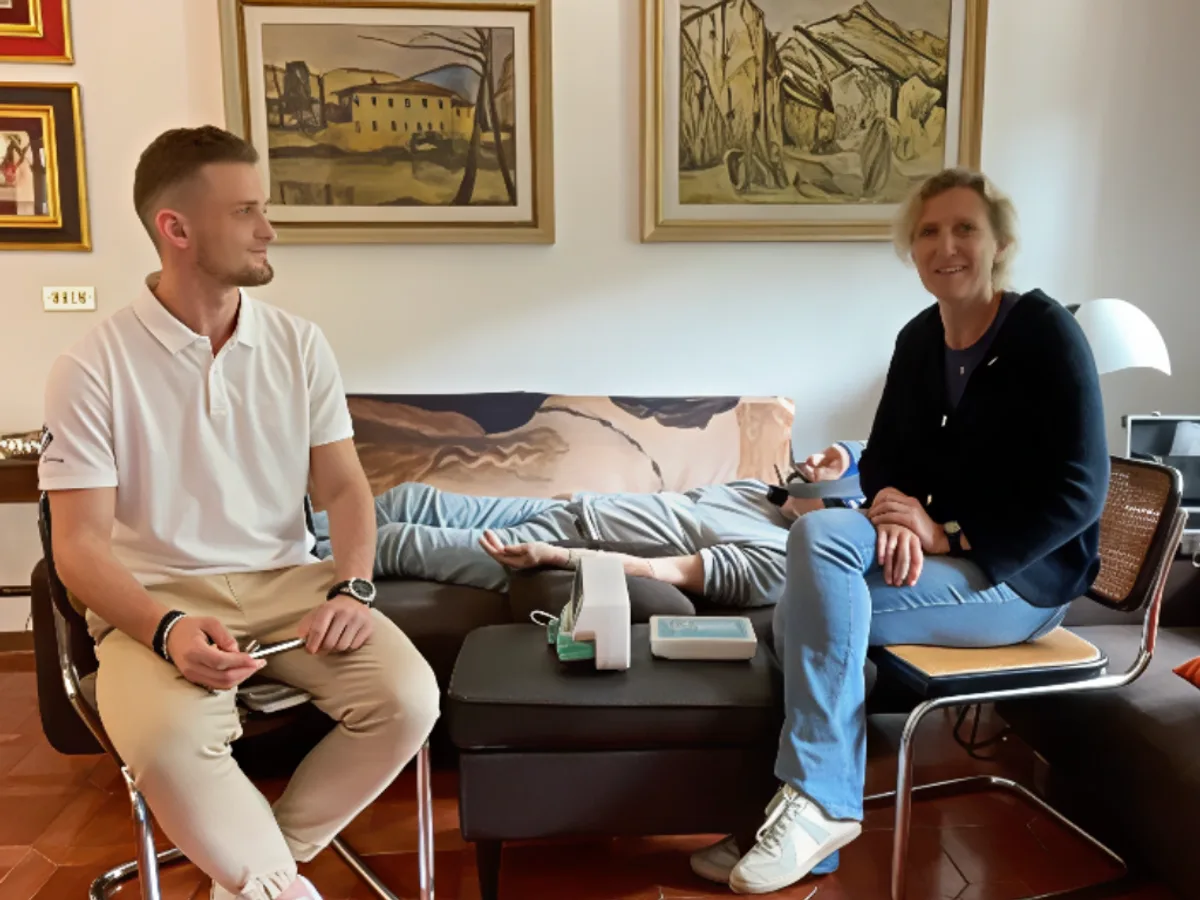
Your dedicated coordinator monitors muscle function, CK levels and overall well-being. A medical-grade wearable bracelet supports continuous health tracking regardless of your location. Follow-up MRC grading and 6MWT assessments are scheduled at regular intervals.
The first step is free. Request a medical consultation and our medical consultant will contact you within 24 hours.
Request ConsultationSafety Profile
Cellular therapy is considered safe when delivered under proper medical supervision and according to validated protocols. In our practice, the procedure is well-tolerated by the majority of myopathy patients.
Temporary mild reactions — such as transient local discomfort at the infusion site, slight fatigue or low-grade temperature — may occur in a minority of patients. These are typically short-lived and indicate active immune engagement.
A final medical assessment is performed on-site before every treatment session. If a patient's status has changed — including respiratory deterioration or acute disease flare — the programme may be temporarily modified or postponed for safety reasons.
All contraindications are evaluated individually. A contraindication in one clinical context does not necessarily preclude treatment in a different context — this is always determined by physician assessment.
Standard Contraindications
Active acute infection or fever
Active malignancy or ongoing chemotherapy / radiotherapy
Severe decompensated cardiac or renal failure
Pregnancy
Post-Treatment
Dedicated rehabilitation specialist
monitors muscle function, respiratory capacity and exercise tolerance
Personalised rehabilitation programme
graduated resistance training adapted to your myopathy subtype and current MRC grade
Medical-grade wearable monitoring
continuous physiological data collection supporting clinical decision-making
Long-term coordinator support
proactive check-ins, CK level tracking and response to any changes in status
Continued clinical access
our medical team remains available for ongoing reassessment and protocol adjustment
Muscle tissue regeneration follows a slower biological timeline than many other tissues. The period following treatment is as medically important as the treatment itself — consistent rehabilitation, monitoring of inflammatory markers and graduated return to activity are essential for realising the full therapeutic benefit.
Patient Stories
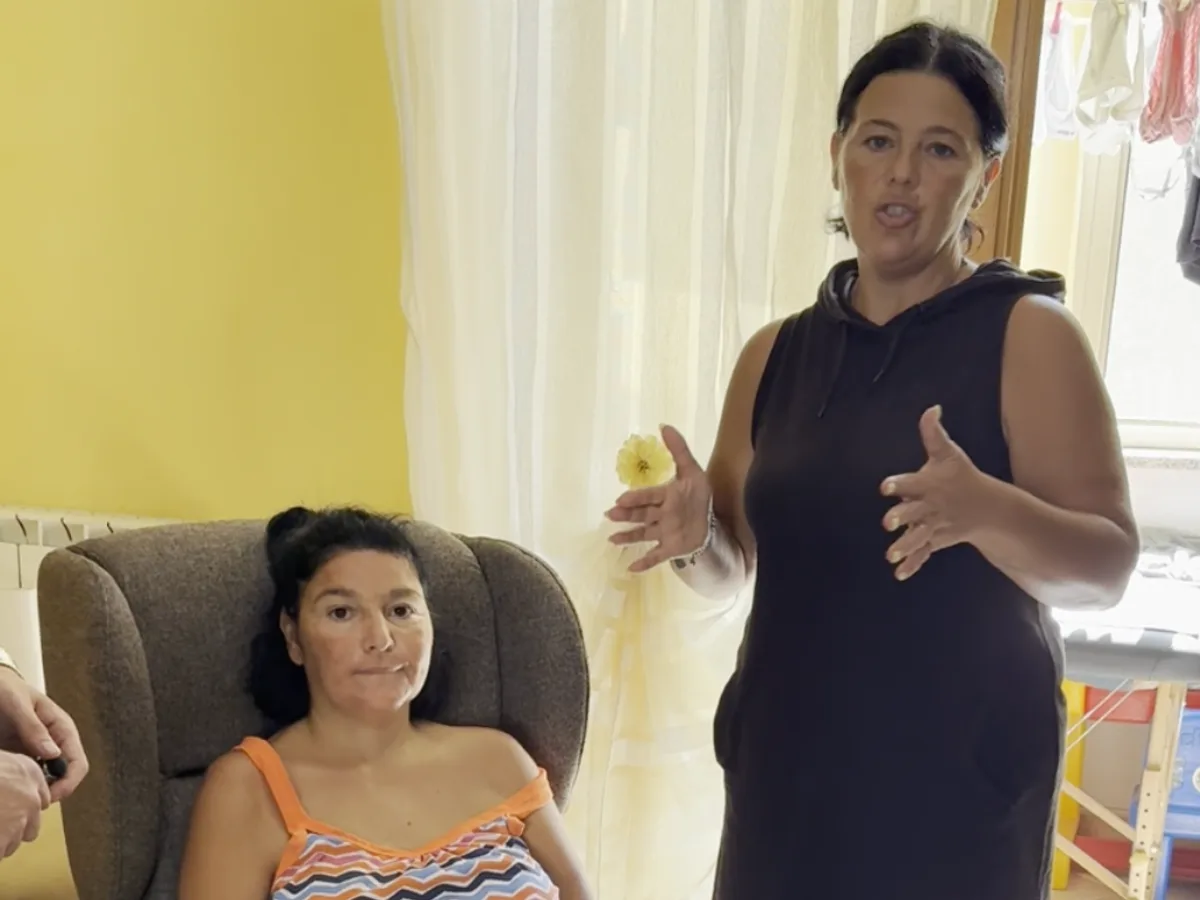
“Prednisone kept the polymyositis under control for a while, but the side effects were brutal. Four months after the programme, my blood markers dropped to levels I had not seen since diagnosis. I climb the stairs at home without the railing now. My rheumatologist reduced the prednisone for the first time.”
Patient
Polymyositis · Germany
Every case is assessed individually by our physician team. Request a consultation to discuss your specific situation with our physician team.
Request ConsultationPatient Cases
Documented treatment outcomes recorded by the BioCells Medical team after personalised regenerative medicine protocols.
Get Started
If you or someone you love has been diagnosed with a myopathy, our medical team is available for a free, no-obligation medical consultation — based on your diagnosis, myopathy subtype and individual clinical profile.
We review every inquiry personally. You will speak with a physician, not an administrator.
Submit your case online or by phone
Our medical consultant contacts you to review your documents
The medical board presents your personalised treatment plan
Request a Consultation
Tell us about your condition. Our medical consultant will contact you within 24 hours to review your documents.
Open Consultation FormMultilingual coordination — English, Italian, French, Russian, Polish
Evidence Base
Our clinical approach is informed by and consistent with published research in the field of regenerative medicine.