CEREBELLAR ATAXIA · HEREDITARY AND ACQUIRED FORMS
A physician-led, laboratory-verified treatment programme designed to support cerebellar function, slow progressive coordination loss and improve quality of life — tailored to the individual biology, ataxia subtype and clinical profile of each patient.
Request Medical ConsultationAbout the Condition
Cerebellar ataxia is a group of neurological conditions characterised by progressive loss of coordination, balance and fine motor control — caused by degeneration of the cerebellum and its connecting neural pathways. The cerebellum contains approximately 50% of all neurons in the brain and is responsible for coordinating voluntary movement, gait, posture, speech and eye movement.
As Purkinje cells and other cerebellar neurons degenerate, the brain progressively loses its ability to coordinate movement. Patients experience worsening gait instability, limb incoordination, slurred speech (dysarthria) and difficulty with tasks requiring fine motor precision.
Cerebellar ataxia affects approximately 3–6 people per 100,000, depending on subtype and geographic region. There is no approved pharmacological treatment that reverses cerebellar degeneration. Standard care focuses on symptomatic management and rehabilitation — which is where our programme offers a structured biological intervention.
Friedreich's Ataxia
The most common hereditary ataxia, caused by GAA repeat expansion in the FXN gene leading to frataxin deficiency. Typically presents before age 25 with progressive gait ataxia, cardiomyopathy and scoliosis. Frataxin deficiency impairs mitochondrial iron-sulphur cluster assembly, causing oxidative damage to cerebellar and dorsal root ganglion neurons.
Spinocerebellar Ataxia (SCA)
A group of autosomal dominant hereditary ataxias with over 40 identified subtypes (SCA1–SCA48). Each subtype involves distinct genetic mutations, but all share progressive cerebellar degeneration. SCA3 (Machado-Joseph disease) is the most prevalent worldwide. Onset, progression rate and associated features vary by subtype.
Sporadic / Idiopathic Cerebellar Ataxia
Progressive cerebellar degeneration without identifiable genetic cause or family history. Accounts for a significant proportion of late-onset ataxia cases. May overlap clinically with multiple system atrophy (MSA-C) in early stages. Diagnosis requires exclusion of hereditary, autoimmune and toxic causes.
Autoimmune Cerebellar Ataxia
Cerebellar degeneration mediated by autoantibodies targeting Purkinje cells or other cerebellar structures. Associated with anti-GAD65, anti-VGCC, anti-Yo and other neuronal antibodies. May occur as a paraneoplastic syndrome or as a primary autoimmune condition. Early identification of the immune mechanism is critical for treatment planning.
Our program is individually adapted for all subtypes and all stages of progression.
Important: Each patient is accepted into the programme only after a comprehensive individual medical assessment, which evaluates diagnosis, ataxia subtype, SARA score, cardiac status (in Friedreich's ataxia), and overall clinical profile.
The BioCells Program
Our cerebellar ataxia programme combines five biological components into a single personalised protocol. No two protocols are identical — each is constructed following a detailed medical evaluation of the patient's biological profile, ataxia subtype, disease stage and clinical priorities.
Minimally invasive administration
Treatment is delivered by intravenous infusion or targeted local injection using specialised medical systems — not surgical instruments.
No general anaesthesia
The procedure is performed under local anaesthesia only, avoiding the risks associated with general sedation — particularly relevant in patients with compromised coordination and respiratory control.
No risk of immune rejection
MSCs are immunoprivileged: they express low levels of HLA-I, lack HLA-II and carry a minimal risk of rejection whether the protocol is autologous or allogeneic. Allogeneic MSC protocols do not require immunosuppression.
Targets the underlying biology, not just symptoms
Rather than masking symptoms, our protocol targets neuroinflammation, oxidative stress and mitochondrial dysfunction — the biological drivers of cerebellar degeneration.
Complements existing medication and rehabilitation
Our programme is compatible with existing medication and rehabilitative approaches. Patients do not need to discontinue current treatment before commencing our protocol.
Patients from around the world
We work with patients from around the world. Airport transfers, accommodation, visa support and multilingual coordination are included in every treatment programme.
What It Is
T-regs are specialised immune cells that naturally suppress destructive inflammatory processes in the nervous system. They are the immune system's built-in mechanism for preventing excessive immune damage to healthy tissue.
How It Is Done
Delivered autologously (from the patient's own blood) or allogeneically (from a certified donor), based on the patient's immune status and clinical assessment. Preparation and quality testing performed in our laboratory.
Biological Mechanisms
How This Helps in Cerebellar Ataxia
In autoimmune cerebellar ataxia, the immune system directly attacks Purkinje cells. In hereditary forms, secondary neuroinflammation accelerates degeneration beyond what the genetic defect alone would cause. T-regs suppress these destructive immune responses, reduce collateral damage to surviving cerebellar neurons and help restore a balanced immune environment that slows progression.
Your Medical Board
The exact combination, dosage, sequencing and delivery method of all five components is determined individually by our medical board for each patient. No two treatment protocols are identical. Your programme is constructed based on your specific diagnosis, ataxia subtype, biological markers and clinical priorities.
Your protocol is designed individually. Speak with our medical team to understand what your personalised program would include.
Request ConsultationPatient Journey
Your case is reviewed remotely by our physician team. We assess your diagnosis, current SARA score, ataxia subtype, medical history and treatment goals. This consultation is free and carries no obligation.
A detailed review of all medical documentation, genetic testing results and neuroimaging. Our medical board evaluates eligibility, confirms safety parameters and designs your personalised therapeutic protocol.
Your cells are collected, isolated, expanded and quality-tested in our laboratory. Each batch receives a full traceability certificate. This stage typically takes 2–3 weeks.
Cells are delivered by intravenous infusion or targeted local administration — no surgery, no general anaesthesia. Airport transfers, accommodation and visa support are included in the programme for international patients.
Structured rehabilitation sessions with our specialist, focused on cerebellar-specific coordination training, gait retraining and balance work. Available at our clinic or remotely coordinated with your local medical team.
Your dedicated coordinator monitors SARA scores, coordination status and overall well-being. A medical-grade wearable bracelet supports continuous health tracking regardless of your location.
The first step is free. Request a medical consultation and our medical consultant will contact you within 24 hours.
Request ConsultationSafety Profile
Cellular therapy is considered safe when delivered under proper medical supervision and according to validated protocols. In our practice, the procedure is well-tolerated by the majority of ataxia patients.
Temporary mild reactions — such as transient local discomfort at the infusion site, slight fatigue or low-grade temperature — may occur in a minority of patients. These are typically short-lived and indicate active immune engagement.
A final medical assessment is performed on-site before every treatment session. If a patient's status has changed — including cardiac deterioration in Friedreich's ataxia — the programme may be temporarily modified or postponed for safety reasons.
All contraindications are evaluated individually. A contraindication in one clinical context does not necessarily preclude treatment in a different context — this is always determined by physician assessment.
Standard Contraindications
Active acute infection or fever
Active malignancy or ongoing chemotherapy / radiotherapy
Severe decompensated cardiac or renal failure
Pregnancy
Post-Treatment
Dedicated rehabilitation specialist
monitors coordination, gait stability and overall functional status
Personalised cerebellar rehabilitation programme
focused on balance, coordination and speech therapy adapted to current SARA score
Medical-grade wearable monitoring
continuous physiological data collection supporting clinical decision-making
Long-term coordinator support
proactive check-ins, clinical guidance and response to any changes in status
Continued clinical access
our medical team remains available for ongoing reassessment and protocol adjustment
Biological regeneration of cerebellar tissue requires time, consistent monitoring and clinical adjustment. The period following treatment is as medically important as the treatment itself — and our team remains actively involved throughout.
Patient Stories
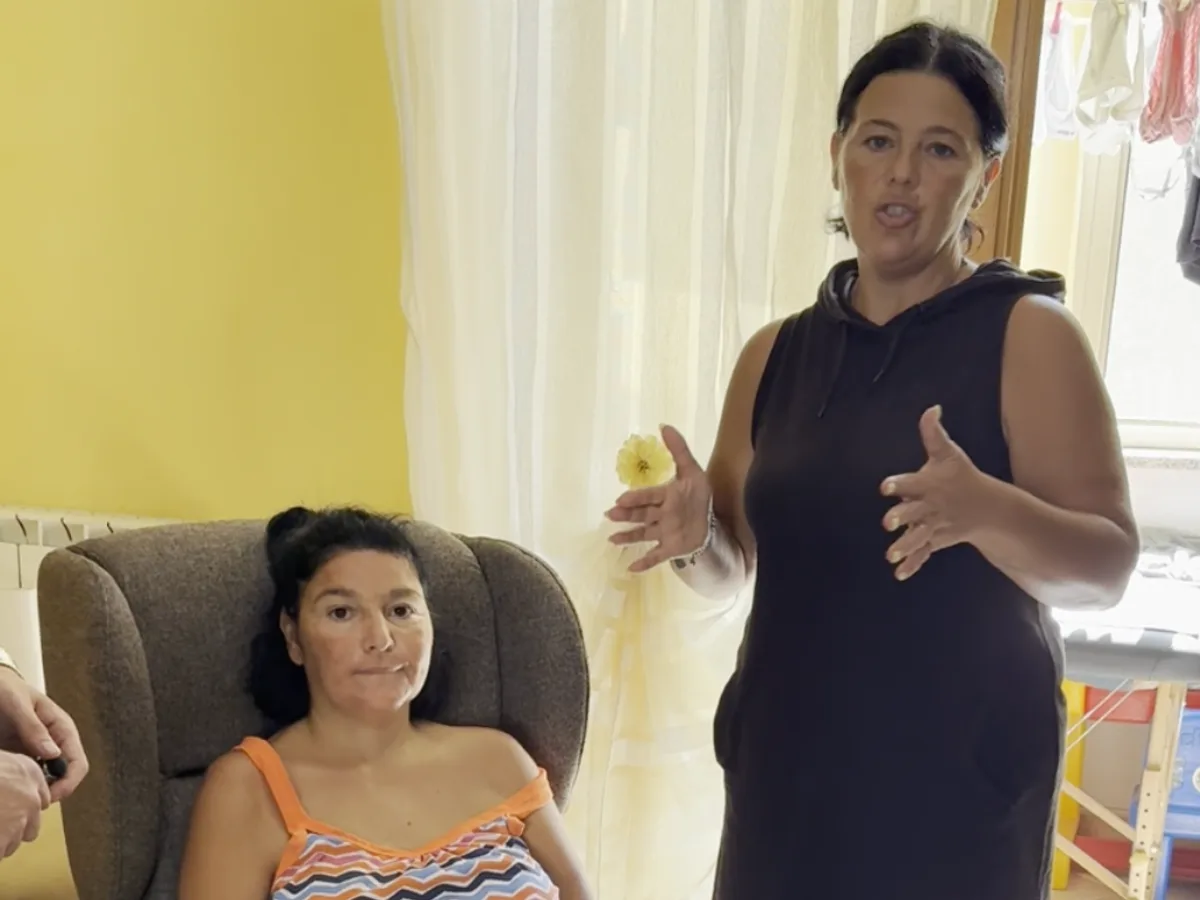
“She walked to school with a cane. That's the sentence I never thought I'd say. At seventeen she couldn't cross a room without holding onto furniture, and four months after treatment she was walking to school. Her cardiologist also noted improvement on the echocardiogram, which we weren't even expecting.”
Patient's mother
Friedreich's Ataxia · France
Every case is assessed individually by our physician team. Request a consultation to discuss your specific situation with our physician team.
Request ConsultationPatient Cases
Documented treatment outcomes recorded by the BioCells Medical team after personalised regenerative medicine protocols.
Get Started
If you or someone you love has been diagnosed with cerebellar ataxia, our medical team is available for a free, no-obligation medical consultation — based on your diagnosis, ataxia subtype and individual clinical profile.
We review every inquiry personally. You will speak with a physician, not an administrator.
Submit your case online or by phone
Our medical consultant contacts you to review your documents
The medical board presents your personalised treatment plan
Request a Consultation
Tell us about your condition. Our medical consultant will contact you within 24 hours to review your documents.
Open Consultation FormMultilingual coordination — English, Italian, French, Russian, Polish
Evidence Base
Our clinical approach is informed by and consistent with published research in the field of regenerative medicine.