INFLAMMATORY BOWEL DISEASE · CROHN'S ILEITIS · CROHN'S COLITIS · FISTULISING CROHN'S
A physician-led, laboratory-verified treatment programme designed to reduce intestinal inflammation, support mucosal healing and restore long-term disease control — tailored to the individual biology, disease phenotype and clinical profile of each Crohn's patient.
Request Medical ConsultationAbout the Condition
Crohn's disease is a chronic inflammatory condition of the gastrointestinal tract characterised by transmural inflammation — meaning it affects the full thickness of the intestinal wall. Unlike ulcerative colitis, Crohn's can involve any segment from mouth to anus, though the terminal ileum and colon are most frequently affected.
The disease follows a relapsing-remitting course: periods of active inflammation (flares) alternate with periods of clinical remission. Over time, uncontrolled inflammation leads to structural damage — strictures, fistulae and bowel resection. Approximately 50% of patients require surgery within 10 years of diagnosis.
Crohn's affects approximately 3–20 per 100,000 people annually in Western populations. Standard treatment relies on immunosuppressants and biologics (anti-TNF, anti-integrins, anti-IL-12/23), which lose efficacy over time in a significant proportion of patients. For those with refractory or fistulising disease, our programme offers a targeted biological approach grounded in the strongest clinical evidence base in regenerative medicine for any inflammatory condition.
Ileocolonic Crohn's
The most common phenotype, affecting both the terminal ileum and colon. Represents approximately 40–50% of all Crohn's diagnoses. Symptoms typically include abdominal pain, diarrhoea, weight loss and fatigue. Risk of stricture formation increases with disease duration.
Ileal Crohn's
Confined to the small intestine, primarily the terminal ileum. Represents approximately 30% of cases. Often presents with right lower quadrant pain and may mimic appendicitis at first presentation. Fibrostenotic complications are more common in this phenotype.
Colonic Crohn's
Limited to the colon without small bowel involvement. Represents approximately 20% of cases. Clinical presentation may overlap with ulcerative colitis, requiring careful histological and endoscopic differentiation. Higher risk of perianal disease.
Perianal / Fistulising Crohn's
Characterised by abnormal tract formation between the intestine and surrounding tissues — perianal fistulae, rectovaginal fistulae, or enterocutaneous fistulae. Affects up to 40% of Crohn's patients over their lifetime. This phenotype has the strongest evidence for MSC-based therapy: darvadstrocel (Alofisel) received EU marketing authorisation in 2018 specifically for complex perianal fistulae in Crohn's disease.
Our program is individually adapted for all subtypes and all stages of progression.
Important: Each patient is accepted into the programme only after a comprehensive individual medical assessment, which evaluates diagnosis, disease phenotype, current medication regimen, fistula status and overall clinical profile.
The BioCells Program
Our Crohn's disease programme combines five biological components into a single personalised protocol. No two protocols are identical — each is constructed following a detailed medical evaluation of the patient's biological profile, disease phenotype and clinical priorities.
Minimally invasive administration
Treatment is delivered by intravenous infusion or targeted local injection — not surgical instruments. For fistulising disease, local MSC injection is a minimally invasive alternative to complex surgical repair.
No general anaesthesia
All procedures are performed under local anaesthesia or without anaesthesia, reducing risk and recovery time.
No risk of immune rejection
MSCs are immunoprivileged: they express low levels of HLA-I, lack HLA-II and carry a minimal risk of rejection whether the protocol is autologous or allogeneic. Allogeneic MSC protocols do not require immunosuppression.
Targets the underlying biology, not just symptoms
Rather than broadly suppressing the immune system, our protocol targets the specific Th1/Th17 imbalance and mucosal barrier dysfunction that drive Crohn's disease — aiming for mucosal healing, not just symptom control.
Complements existing medication
Our programme is compatible with biologics, immunomodulators and other current Crohn's medications. Patients do not need to discontinue existing treatment before commencing our protocol.
Patients from around the world
We work with patients from around the world. Airport transfers, accommodation, visa support and multilingual coordination are included in every treatment programme.
What It Is
T-regs are specialised immune cells that naturally suppress excessive inflammatory responses in the gut. They are the immune system's built-in mechanism for maintaining intestinal tolerance — the ability to distinguish between harmful pathogens and harmless food antigens or commensal bacteria.
How It Is Done
Delivered autologously (from the patient's own blood) or allogeneically (from a certified donor), based on the patient's immune status and clinical assessment. Preparation and quality testing performed in our laboratory.
Biological Mechanisms
How This Helps in Crohn's Disease
Crohn's disease is fundamentally a disorder of intestinal immune regulation — the immune system attacks the gut lining as if it were a foreign threat. T-regs directly counteract this by restoring tolerance, suppressing the destructive immune response and re-establishing the immunological equilibrium needed for sustained remission.
Your Medical Board
The exact combination, dosage, sequencing and delivery method of all five components is determined individually by our medical board for each patient. No two treatment protocols are identical. Your programme is constructed based on your specific diagnosis, disease phenotype, fistula status, biological markers and clinical priorities.
Your protocol is designed individually. Speak with our medical team to understand what your personalised program would include.
Request ConsultationPatient Journey
Your case is reviewed remotely by our physician team. We assess your diagnosis, current disease activity (CDAI/HBI), medication history, fistula status and treatment goals. This consultation is free and carries no obligation.
A detailed review of all medical documentation — endoscopy reports, MRI findings, laboratory results and surgical history. Our medical board evaluates eligibility, confirms safety parameters and designs your personalised therapeutic protocol.
Your cells are collected, isolated, expanded and quality-tested in our laboratory. Each batch receives a full traceability certificate. This stage typically takes 2–3 weeks.
Cells are delivered by intravenous infusion for systemic disease, or by targeted local injection for fistulising disease — no general anaesthesia required. Airport transfers, accommodation and visa support are included in the programme for international patients.
Structured nutritional rehabilitation and gut restoration programme, adapted to your current disease status and nutritional deficiencies. Includes dietary guidance, micronutrient optimisation and functional recovery planning.
Your dedicated coordinator monitors disease activity markers, provides clinical guidance and adjusts recommendations based on your follow-up data. Repeat endoscopy and MRI findings are reviewed by our medical board to assess mucosal healing progress.
The first step is free. Request a medical consultation and our medical consultant will contact you within 24 hours.
Request ConsultationSafety Profile
Cellular therapy is considered safe when delivered under proper medical supervision and according to validated protocols. MSC therapy for Crohn's disease has one of the strongest safety profiles in regenerative medicine — supported by the EU marketing authorisation of darvadstrocel (Alofisel) following Phase III clinical trials.
Temporary mild reactions — such as transient local discomfort at the injection site, slight fatigue or low-grade temperature — may occur in a minority of patients. These are typically short-lived and indicate active immune engagement.
A final medical assessment is performed on-site before every treatment session. If a patient's disease status has changed — including new abscess formation or acute obstruction — the programme may be temporarily modified or postponed for safety reasons.
All contraindications are evaluated individually. A contraindication in one clinical context does not necessarily preclude treatment in a different context — this is always determined by physician assessment.
Standard Contraindications
Active acute infection or intra-abdominal abscess
Active malignancy or ongoing chemotherapy / radiotherapy
Severe decompensated cardiac or renal failure
Pregnancy
Post-Treatment
Dedicated gastroenterological monitoring
tracks disease activity markers, nutritional status and mucosal healing progress
Personalised nutritional rehabilitation programme
adapted to current absorptive capacity and micronutrient deficiencies
Medical-grade wearable monitoring
continuous physiological data collection supporting clinical decision-making
Long-term coordinator support
proactive check-ins, clinical guidance and response to any changes in disease status
Continued clinical access
our medical team remains available for ongoing reassessment, repeat endoscopy review and protocol adjustment
Mucosal healing in Crohn's disease is a gradual biological process. The post-treatment period requires structured monitoring, nutritional support and clinical reassessment to consolidate gains and adjust the protocol based on objective findings.
Patient Stories
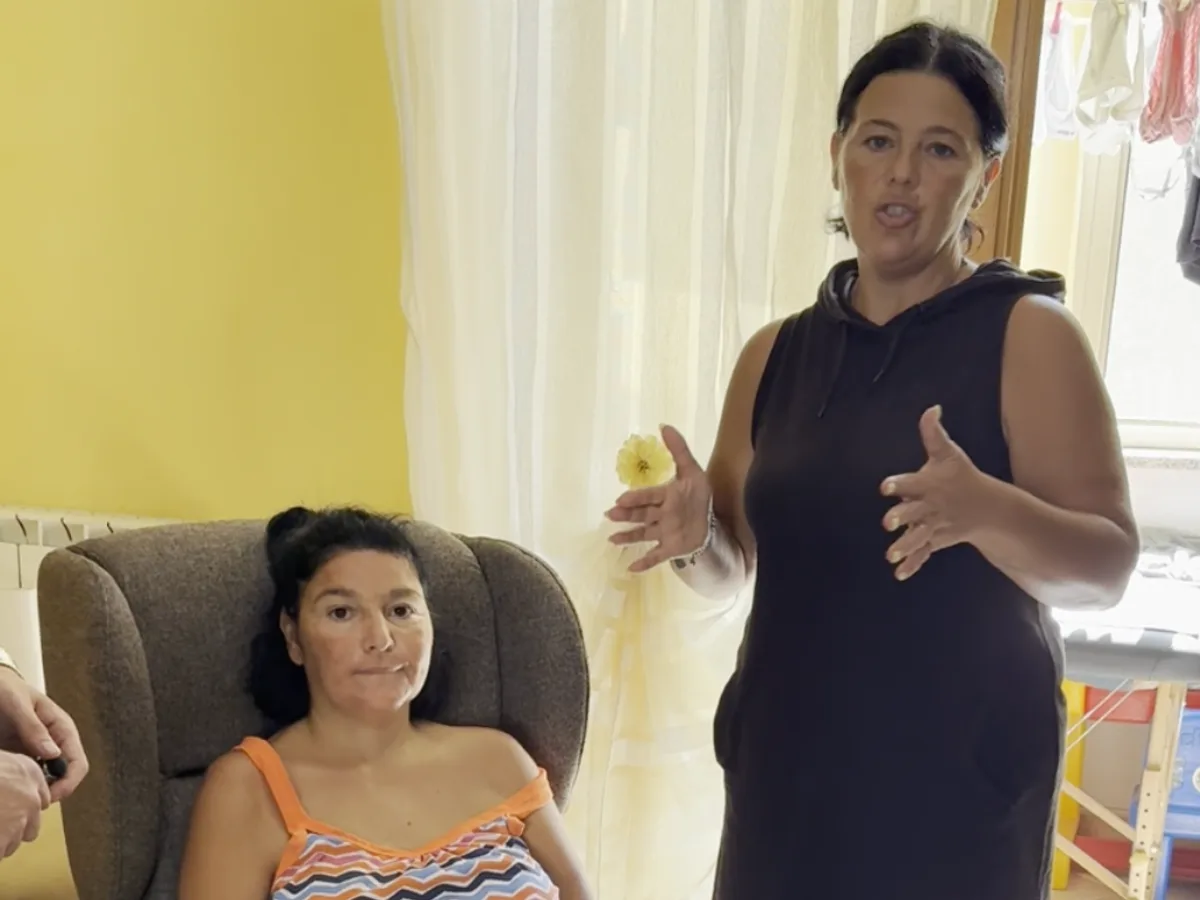
“My biologic stopped working after four years. Flare after flare, steroids every few weeks, weight dropping. After treatment I had one mild flare in eight months. One. My gastroenterologist asked what had changed. My inflammation markers were the best he had seen since diagnosis.”
Patient
Ileocolonic Crohn's disease · United Kingdom
Every case is assessed individually by our physician team. Request a consultation to discuss your specific situation with our physician team.
Request ConsultationPatient Cases
Documented treatment outcomes recorded by the BioCells Medical team after personalised regenerative medicine protocols.
Get Started
If you or someone you love has been diagnosed with Crohn's disease, our medical team is available for a free, no-obligation medical consultation — based on your diagnosis, current disease activity and individual clinical profile.
We review every inquiry personally. You will speak with a physician, not an administrator.
Submit your case online or by phone
Our medical consultant contacts you to review your documents
The medical board presents your personalised treatment plan
Request a Consultation
Tell us about your condition. Our medical consultant will contact you within 24 hours to review your documents.
Open Consultation FormMultilingual coordination — English, Italian, French, Russian, Polish
Evidence Base
Our clinical approach is informed by and consistent with published research in the field of regenerative medicine.